AI Based Design
AI Copilots Are Reshaping Parametric Design in 2026
How AI copilots are transforming parametric and computational design in architecture—keeping geometry rule-driven, editable, and buildable.

Parametric Design Meets Its Copilot
Parametric and computational design have always promised something extraordinary: buildings and objects defined not as fixed drawings but as living systems of rules, where changing a single input ripples intelligently through an entire model. For decades that promise came with a steep tax. To work parametrically, a designer had to become a part-time programmer — writing scripts, wiring node graphs, and debugging logic before a single form appeared on screen. The power was real, but so was the barrier to entry.
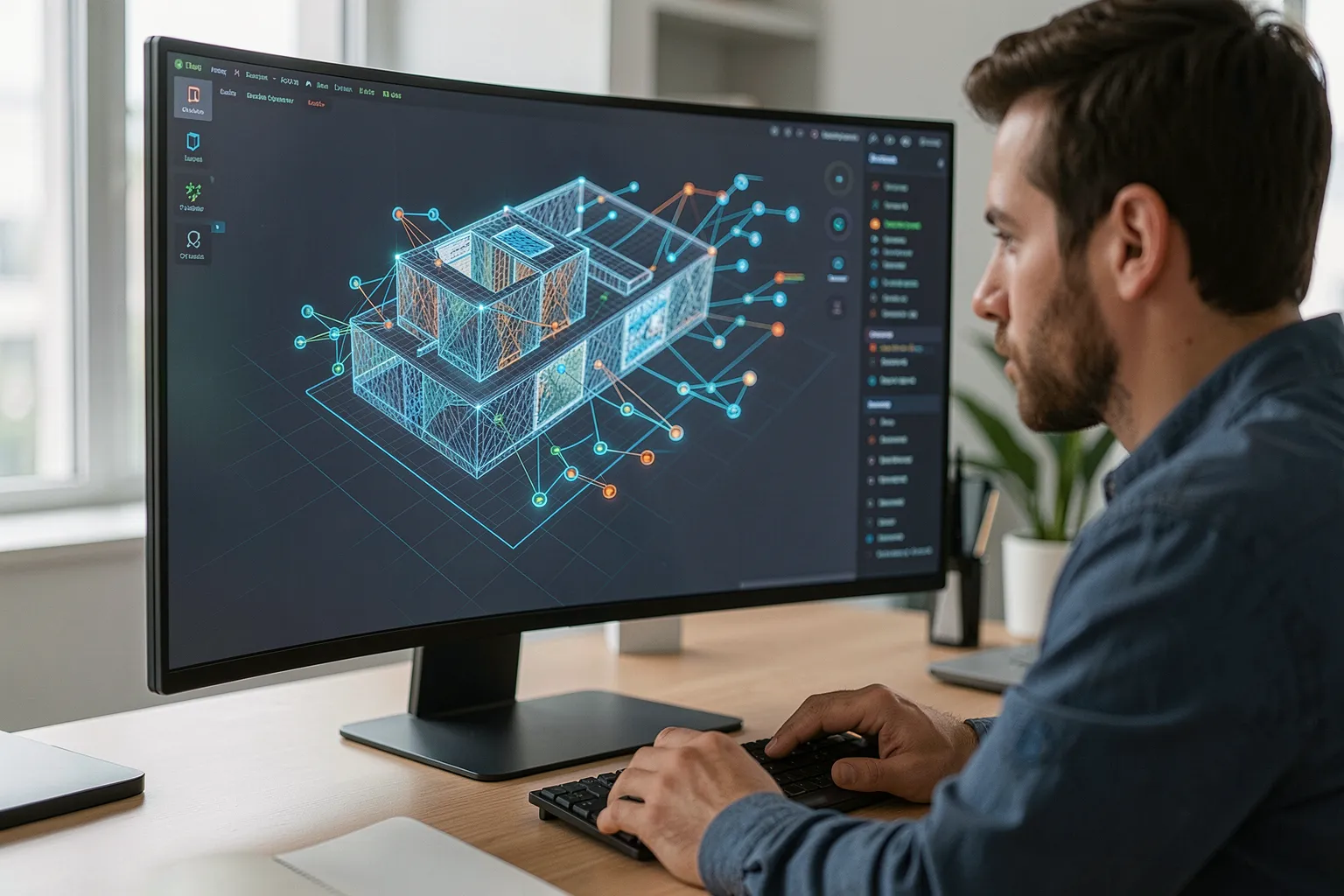
In 2026 that barrier is finally eroding, and the reason is the arrival of AI copilots that sit directly inside computational design tools. Rather than replacing the designer, these systems translate intent into the scripting and geometry logic that parametric workflows demand. You describe what you want — a facade that responds to solar exposure, a stair that adapts to a changing floor height — and the copilot drafts the underlying definition. The result is a quiet but profound shift in who can practise computational design and how quickly they can move from concept to a working model.
From Frozen Renders to Rule-Driven Geometry
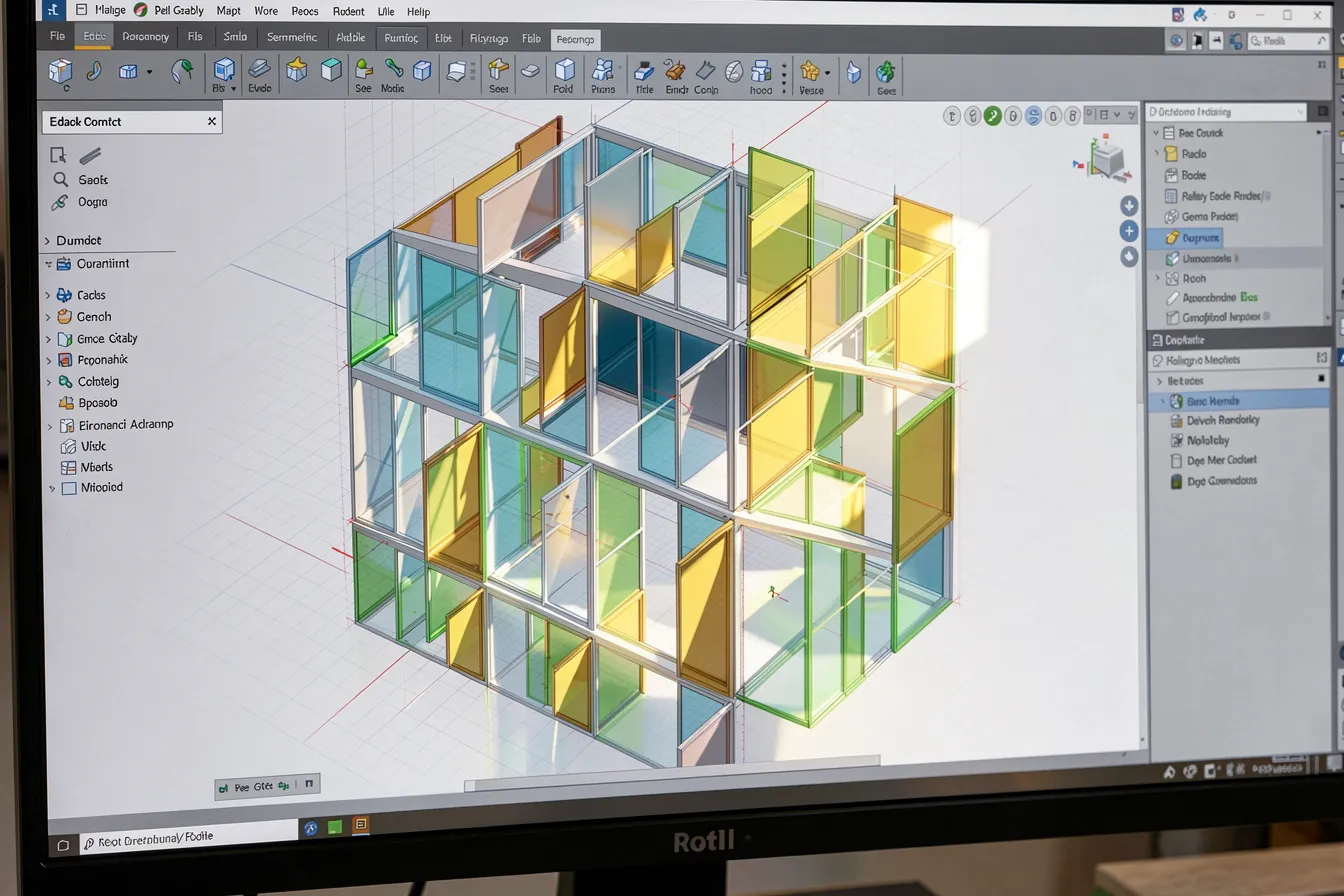
The most important lesson of the past two years is that generative design is strongest when it produces editable relationships rather than frozen images. An AI that spits out a beautiful but static render leaves the designer stranded: there is nowhere to go from a picture. An AI that generates a parametric definition, by contrast, hands back something alive — geometry that can keep evolving after the first prompt, responding to new constraints and new decisions.
This is why the current generation of tools keeps the geometry rule-driven and revisable. Research into large-language-model assistance for design has shown that these models can meaningfully speed up scripting and 3D option generation inside parametric and BIM workflows, and major platform guidance now centres on editable, model-based design rather than image-only ideation. The distinction matters enormously in practice. Rule-driven output slots into the existing production pipeline; a locked render sits outside it, admired but useless for development.
For designers, the practical effect is that the copilot handles the tedious translation layer — turning a described relationship into functioning logic — while the human retains authorship over the rules themselves. The design intent stays with the person; the syntax burden shifts to the machine.
Balancing Many Goals at Once
Real design is never the pursuit of a single metric. A good building balances daylight against glare, adjacency against privacy, circulation against usable area, and all of it against cost and buildability. Computational design has long been the natural home for this kind of many-objective thinking, because a parametric model can generate and compare a wide field of options rather than committing prematurely to one.
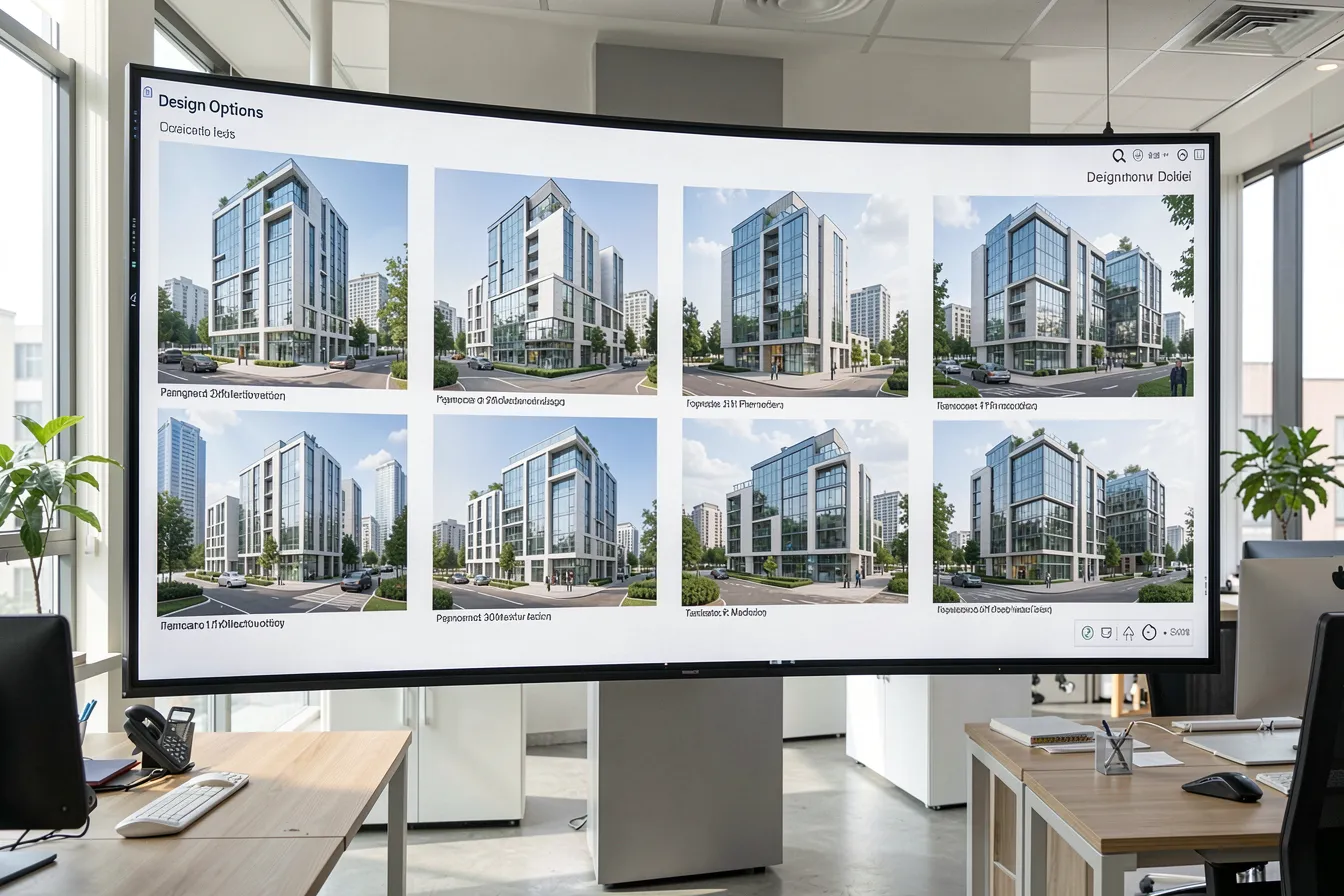
AI is pushing this further by helping designers navigate the tradeoff space instead of accepting a single „optimised“ answer. The strongest approach treats generative search as a way to surface diverse, viable options that each strike a different balance — a set of good compromises to choose between, not a verdict handed down by an algorithm. Multi-objective generative search, pioneered in projects that let teams weigh daylight, adjacency, views, and cost together, remains one of the clearest demonstrations of computational design doing something a human could not do by hand at the same speed.
The copilot’s role here is to make that exploration accessible. Setting up a multi-objective study once required deep scripting expertise; increasingly, a designer can describe the goals in plain terms and let the AI assemble the parametric scaffolding needed to explore them.
Context, Constraints, and Code
A building is never designed on a blank page. Site geometry, climate, neighbouring massing, access routes, and zoning rules all shape the space of sensible options before a designer draws anything. The more capable computational tools now pull these contextual inputs in early, so that generated options respond to place — terrain, solar exposure, surroundings — rather than floating free of it. Context-aware generation is strongest precisely when environmental and regulatory realities define the search space from the outset.
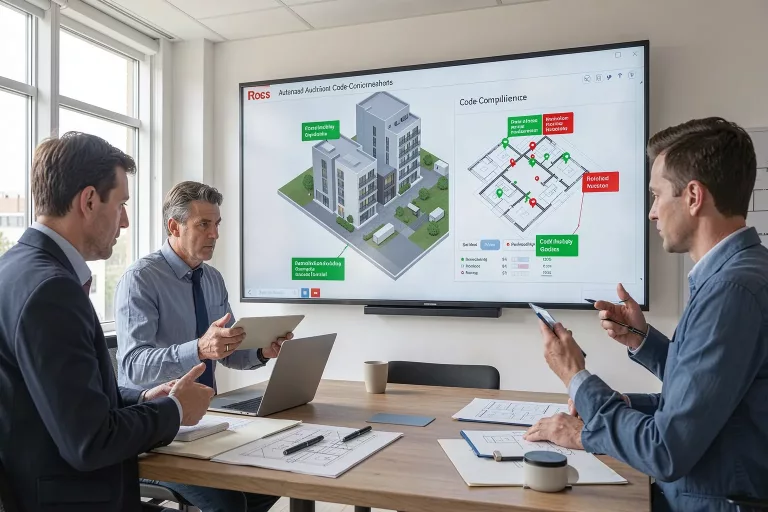
Code compliance is following the same logic. The near-term value of AI here is not autonomous permitting — no one should expect a model to become the authority having jurisdiction — but early screening and cited retrieval. Tools that position an AI copilot around building-code research help teams surface likely problems in egress, envelope, accessibility, or area logic sooner, and document their reasoning more clearly. It is triage, not judgement: the AI flags what deserves a closer look, and human experts make the call.
What This Means for Design Teams
The teams getting the most from AI copilots in 2026 share a mindset. They treat the copilot as a collaborator that removes friction from the technical layer of computational design, not as an oracle that produces finished buildings. They stay in command of the rules, the goals, and the constraints, and they lean on the AI to accelerate the translation of those into working parametric logic.
This division of labour is where the real productivity story lives. The barrier that once kept parametric design in the hands of a scripting-fluent minority is coming down, which means more of a studio can participate in computational workflows and iterate faster. But the judgement that separates a good design from a merely generated one — understanding site, program, structure, and human experience — becomes more valuable, not less. The copilot raises the floor; expertise still sets the ceiling.
Questions and Answers About AI Copilots in Parametric Design
Do AI copilots replace the need to learn parametric tools like Grasshopper or Dynamo?
No — they change how you learn and use them. A copilot can draft a definition from a plain-language description, which lowers the intimidating first hurdle of writing logic from scratch. But to critique, correct, and extend that definition you still need to understand how parametric systems behave: what the nodes do, how data flows, and why a change produces a given result. In practice, designers who understand the underlying tools get far more from a copilot than those who treat it as a black box, because they can spot when the generated logic is wrong and steer it back on course.
Can generative design actually produce a finished, buildable design on its own?
Not reliably, and it is a mistake to expect it to. Generative and computational systems are at their best as bounded option generators — they explore a wide field of viable directions against the goals and constraints you set. Turning one of those options into a buildable design still requires human work on structure, detailing, code interpretation, and coordination. The value is in compressing the search and surfacing tradeoffs faster, not in autonomous authorship. Treat the output as a strong, informed starting point rather than a final answer.
Where does AI add the most value in a computational design workflow today?
The clearest wins are in the technical translation layer and in exploration. AI copilots speed up scripting and 3D option generation, letting designers set up parametric studies and multi-objective searches without weeks of manual node-wiring. They also help with early context integration and code triage — pulling site and regulatory constraints into the process sooner and flagging likely compliance issues before they become expensive. The common thread is that AI accelerates the parts of the workflow that are laborious but rule-bound, freeing human attention for the judgement-heavy decisions that define good design.
The Direction of Travel
The trajectory is clear even where the timeline is not. As copilots grow more capable and integrate more deeply with parametric and BIM environments, computational design will shed its reputation as a specialist discipline and become a more ordinary part of how studios work — much as spreadsheet formulas quietly became a universal skill rather than an expert’s craft. The competitive edge will not come from access to the tools, which is becoming universal, but from the discipline to use them well: clear goals, well-defined constraints, and rigorous human review of what the AI proposes.
For designers and architects, the move today is to experiment deliberately. Take a real project, let a copilot handle the parametric scaffolding for one study, and watch closely where it saves time and where it introduces rework. That hands-on understanding of exactly what the technology does well — and where human expertise remains indispensable — is what will separate the teams that benefit from those that are merely impressed.
At Pixintel, we build tools and intelligence for designers and architects working at the intersection of AI and design. Explore our platform to see how generative technology can move your next project from concept to reality faster.